ChexSystems Explained: How to Get a Bank Account in 2026
Learn ChexSystems explained how to get a bank account even with a negative history. Discover consumer reporting secrets and second-chance options for 2026.

According to industry data from the Federal Reserve, approximately 6% of American households remain unbanked, with a significant portion citing past account closures and reporting issues as a primary barrier to re-entry. In the current 2026 financial landscape, the primary gatekeeper for most traditional institutions is not a person, but a database. To truly understand how to re-enter the financial fold, we must have ChexSystems explained how to get a bank account despite a less-than-perfect record. This specialized consumer reporting agency tracks your activity with deposit accounts similarly to how Equifax or Experian track your credit cards.
The Data Behind the Denial
When a bank denies your application for a new checking account, they are usually reacting to a Consumer Disclosure Report. These reports aggregate incidents such as unpaid overdrafts, suspected fraud, or excessive bounced checks. In 2025 and moving into 2026, banks have tightened their risk models, making it more critical than ever to understand what these agencies see and how you can pivot toward institutions that use alternative screening methods.
By the Numbers
ChexSystems Explained: How to Get a Bank Account and What Matters Most
Many consumers mistakenly believe that their credit score is the only thing banks look at. While many savings account minimum balance requirements explained are influenced by liquidity, the decision to open an account often rests solely on your banking history report. ChexSystems is a specialty consumer reporting agency governed by the Fair Credit Reporting Act (FCRA). This means you have specific legal rights regarding the accuracy of your data.
If you have been flagged, you aren’t necessarily banned from banking forever. The strategy for 2026 involves a three-pronged approach: identifying the errors, settling legitimate debts, and applying for "second-chance" accounts. Let’s look at how different types of institutions compare in their sensitivity to these reports.
| Bank Category | Typical Screening Tool | Difficulty Level | Recovery Options |
|---|---|---|---|
| National Mega-Banks | ChexSystems + EWS | High | Second Chance Accounts |
| Regional Credit Unions | ChexSystems | Moderate | Probationary Periods |
| Neobanks (Fintech) | Proprietary Risk Models | Low | No-ChexSystems Accounts |
| Local Community Banks | ChexSystems / TeleCheck | Moderate | Relationship Banking |
What the Numbers Actually Say About Bank Risk
Banks are fundamentally risk-averse. According to the Consumer Financial Protection Bureau (CFPB), negative information can stay on a specialty report for up to five years. For a bank, a history of "account abuse" suggests a high probability of future loss. This is why having ChexSystems explained how to get a bank account is so vital—it clarifies that you are fighting a data-driven algorithm, not a personal judgment.
In early 2026, data suggests that the surge in digital banking has led to a 12% increase in automated account freezes. If your data matches a high-risk profile, the system triggers an automatic denial. However, many fintech firms and specific credit unions have moved toward "second chance" models. These accounts often function like standard tools but may lack overdraft privileges or have lower daily debit limits. If you are struggling with a traditional application, you might explore the best checking accounts for bad credit 2026 guide to find specific banks that welcome those with past bumps.
The Anatomy of a Banking Report
What exactly shows up? It isn't just a list of banks you've visited. The report captures: - Involuntary Closures: If a bank closed your account due to a negative balance. - Unpaid Fees: Overdraft fees or service charges that weren't paid off. - Fraudulent Activity: Instances of identity theft or check kiting (even if you were a victim). - Atm Abuse: Misuse of automated teller machines. - Inquiries: The number of times you've applied for accounts recently.
If you are planning a move or a fresh start, consult A Complete How to Switch Banks Checklist for 2026 to ensure you don't accidentally leave an old account in a state that could trigger a negative report.
Analyzing the Impact of Unpaid Balances
In the 2026 economy, banks have become faster at reporting small balances to agencies. Previously, some institutions might wait 90 days to report a $20 overdraft. Now, automated systems often push this data to ChexSystems within 60 days of the account being charged off. This rapid reporting makes it essential to resolve any owed balances immediately. Once a debt is paid, the bank must update the report to show a status of "Paid" or "Settled," which significantly improves your chances of of being accepted elsewhere for a Checking product.
Navigating the Re-Entry Process: Practical Steps
So, how do you actually get back into the system? The first step is obtaining your report. Under the FCRA, you are entitled to a free report every 12 months. Visit the ChexSystems website to request your consumer disclosure. Once you have it, verify every line item.
1. Dispute Inaccuracies If you see an account you didn't open or a debt you've already paid, file a dispute. According to the Federal Trade Commission, the agency has 30 days to investigate. If the bank cannot prove the debt, the mark must be removed. This is often the fastest way to scrub your record.
2. Pay What You Owe If the report is accurate, contact the original bank. Ask if they will accept a payment in exchange for a "deletion" or at least an update to the status. Getting a letter showing a zero balance is your golden ticket for a physical branch application.
3. Look for "No-ChexSystems" Banks Several modern financial institutions do not use ChexSystems at all. They might use the NCUA's National Credit Union Administration framework to vet members through other means. These banks often focus on your current ability to maintain a balance rather than your past mistakes.
The Role of Second Chance Checking Accounts
If you have a thick file of negative reports, a "Second Chance" account is your best bet for 2026. These are designed specifically for people with damaged banking histories. While they might carry a monthly fee that cannot be waived, they allow you to rebuild your reputation. After 12 to 24 months of good behavior, most banks will graduate you to a standard account. This is a common path when you are trying to meet checking account direct deposit requirements for a new employer.
""By 2026, the distinction between 'bad credit' and 'bad banking' has blurred. Success requires treating your ChexSystems report with the same rigor as your FICO score.""
Sophisticated Barriers: Early Warning Services (EWS) While ChexSystems is the most famous agency, many big banks (like Chase, Bank of America, and Wells Fargo) also use Early Warning Services (EWS). EWS is owned by the big banks themselves and provides a deeper look at real-time transaction data. If you are denied an account despite a clean ChexSystems report, EWS is likely the culprit. You have the same rights to view and dispute your EWS report as you do with ChexSystems.
What the Numbers Actually Say: The Digital Shift As of 2026, over 70% of new accounts are opened via mobile apps. These shifts mean your data must be pristine. Algorithms don't care about your explanation; they only see the data tags associated with your Social Security number. If you find yourself locked out of digital-only options, don't overlook local credit unions. Many community-focused institutions still offer human underwriting where you can explain your situation to a branch manager.
Long-Term Financial Health and Recovery
Repairing your banking status is only the first step. Once you have secured a new account, you must manage it with precision to avoid a repeat cycle. In today's environment, where savings account interest rates fluctuate based on Fed policy, keeping your liquid cash in a secure, reported account is vital for building future wealth.
Be mindful of technicalities. Small errors, like a failed subscription payment that puts you in the negative, are the most common source of new ChexSystems marks. Setting up low-balance alerts on your phone is a simple but effective strategy to prevent automated reporting triggers.
Frequently asked questions
- You can request a free consumer disclosure report directly from the ChexSystems website once every 12 months. If you have been denied a bank account in the last 60 days, you are also entitled to a free report through an adverse action notice.
Selecting the Right Institution in 2026
When you are ready to apply, you have several paths. Don't simply walk into the nearest branch. Research their specific screening methods. Some banks are "ChexSystems-only," while others are far more restrictive. For those looking for specialized options, credit unions often provide the best balance of low fees and accessible entry. You can compare some of the most competitive options in the best credit union savings rates for 2026 guide to see which institutions are currently expanding their member base.
Remember, your banking history is not a permanent record of failure—it is a data point that can be managed. By disputing errors, settling old debts, and choosing the right Checking products for your current situation, you can regain full access to the American financial system. The automation of 2026 banking makes the initial hurdle higher, but the proliferation of fintech alternatives has also made the "back door" wider than ever before.
Summary Checklist for Re-Entry - Order Your Reports: Get both ChexSystems and EWS disclosures. - Verify Accuray: Look for any accounts that aren't yours or debts that are dated. - Settle Small Balances: Small unpaid fees are the easiest to fix and have the biggest impact. - Target Second Chance Accounts: Don't waste time on "high-tier" accounts if your history is still healing. - Maintain High Standards: Once you have a new account, treat it as a tool for rebuilding your reputation.
With these steps, the mystery of the specialized reporting agencies is solved. By having ChexSystems explained how to get a bank account, you now have the numerical and strategic advantage needed to secure your financial future in 2026 and beyond.
Related articles
See all →
Mastering Checking Account Direct Deposit Requirements in 2026
Comprehensive 2026 data on checking account direct deposit requirements, including fee waivers, bonus eligibility, and how automated payroll transfers impact your monthly costs.
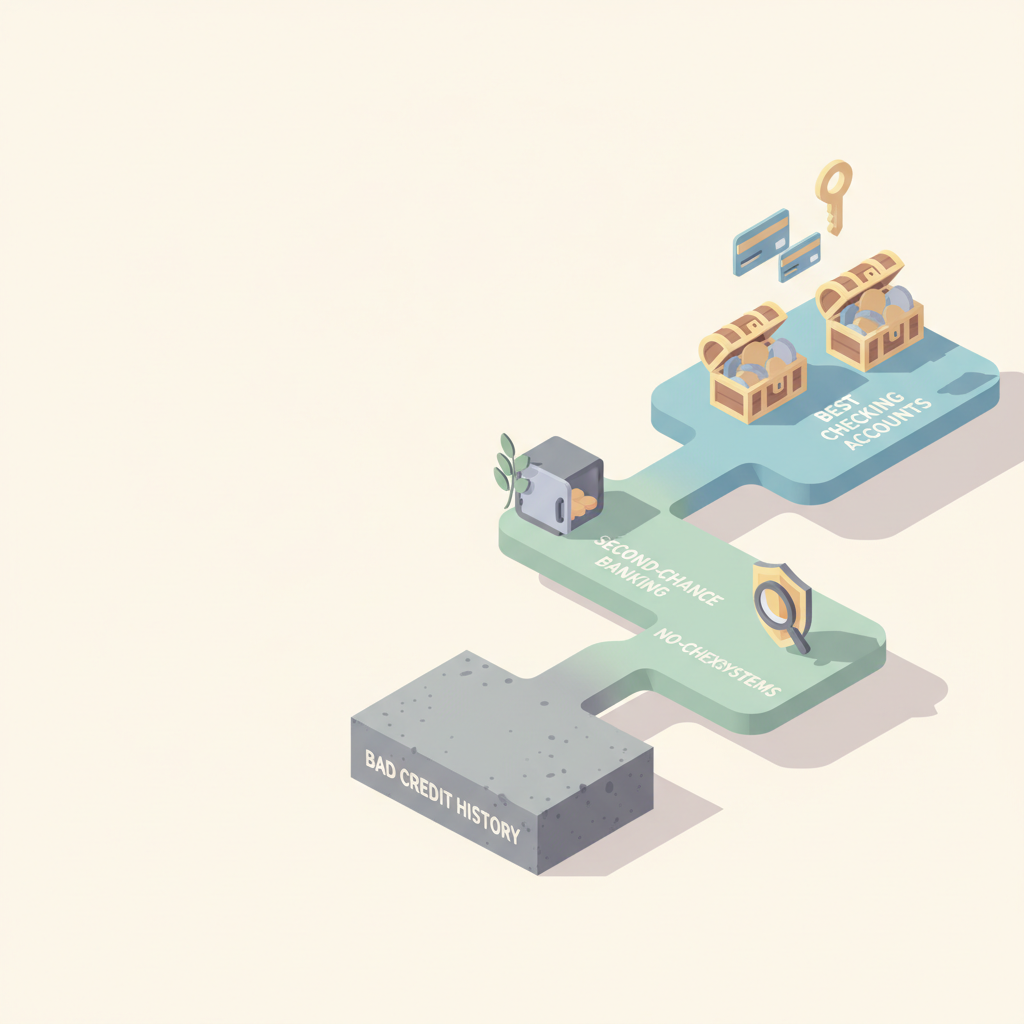
Best Checking Accounts for Bad Credit of 2026: No-ChexSystems Picks
Looking for the best checking accounts for bad credit in 2026? Learn how second-chance banking and no-ChexSystems accounts can restart your financial journey today.

A Complete How to Switch Banks Checklist for 2026
Ready for better rates and lower fees? Use our comprehensive how to switch banks checklist to ensure a seamless transition between financial institutions in 2026.
Best High Yield Checking Accounts of 2026: Compare Top APYs
Looking for the best high yield checking accounts of 2026? Compare top interest-bearing accounts, learn about APY requirements, and maximize your liquid cash today.