Strategy Guide: Are CDs Worth It in 2026 for Your Cash?
Wondering are CDs worth it in 2026? We analyze current interest rates, inflation trends, and liquidity trade-offs to help you decide if locking in a rate is your best move.

Deciding where to park your hard-earned cash in the middle of this year requires a careful balance of yield, security, and timing. For many American savers, the primary question remains: are CDs worth it in 2026? As the Federal Reserve’s monetary policy continues to shift away from the aggressive tightening of previous years, the window to capture historically competitive fixed returns may be narrowing. Certificates of deposit (CDs) have long been a staple for conservative investors, but their value proposition depends entirely on your personal liquidity needs and the broader economic forecast.
In early 2026, the national average interest rate on a 1-year CD has stabilized substantially higher than the lows of the early 2020s, but it remains susceptible to downward pressure if inflation continues to cool toward the Fed's 2% target. When you open a CD, you are essentially entering a contract with a financial institution: you agree to leave your money untouched for a set period, and in exchange, the bank guarantees a fixed interest rate. To determine if this trade-off is advantageous today, you must weigh the certainty of that rate against the flexibility of a high-yield savings account or the potential higher returns of more aggressive investment vehicles.
The Economic Landscape: Why People Ask Are CDs Worth It in 2026
To understand the current appeal of CDs, one must look at the Federal Reserve's H.15 Selected Interest Rates, which tracks the yields of various Treasury and commercial instruments. Currently, the rate environment for 2026 suggests a "higher-for-longer" plateau that started to show cracks late last year. For savers, this creates a unique opportunity to "lock in" rates before any potential rate cuts materialize.
If you believe that the Savings Account Interest Rates Forecast 2026: Where Rates Are Headed points toward a downward trend in the coming months, a CD becomes an incredibly valuable tool. While a liquid savings account might drop its APY overnight, a 2-year or 5-year CD keeps your return static regardless of what happens in the wider market. This predictability is the cornerstone of why many are currently shifting funds from flexible accounts into time-bound deposits.
However, the massive growth in online banking has also shifted the competition. While traditional brick-and-mortar banks might offer meager rates, top-tier online banks and credit unions are frequently pushing the envelope to attract new deposits. According to the FDIC's National Rates and Rate Caps, there remains a significant gap between the national average and the "best-in-class" rates offered by digital institutions. This means that if you aren't shopping around, a CD might not be worth it; but with the right provider, it could be your most consistent performer.
2026 CD Market Snapshot
Weighing the Criteria: When Is a CD the Right Choice?
Determining the value of a CD involves more than just looking at the APY. You must assess your specific financial situation against four key criteria: liquidity, time horizon, tax implications, and opportunity cost.
1. Liquidity Needs The biggest drawback of any CD is the lack of immediate access. If you think you might need the cash for an emergency or a sudden opportunity, the answer to "are CDs worth it in 2026" might be a resounding "no" unless you choose a specialized product. For those who prioritize flexibility, comparing a No Penalty CD vs High Yield Savings: Which 2026 Choice Is Best? can reveal middle-ground options that provide higher rates without the typical withdrawal fees.
2. The Time Horizon CDs typically range from 3 months to 10 years. In 2026, many savers find that the 12-to-18-month range offers the "sweet spot" for yield. Shorter terms might not provide enough of a premium over savings accounts, while significantly longer terms expose you to the risk of being stuck in a low rate if inflation resumes an upward climb unexpectedly. If you have a large sum, you might even consider the specific benefits of Jumbo CD Rates 2026: Best Banks and Highest APYs for Large Deposits to squeeze out every decimal point of profit.
3. Inflation and Real Returns A nominal interest rate of 4.5% is only "worth it" if inflation stays below that mark. If inflation sits at 3%, your real return is only 1.5%. In the current 2026 climate, with inflation showing signs of stabilization, CDs are finally offering positive real returns for the first time in several years. This makes them significantly more attractive than they were in the high-inflation environment of 2022-2024.
Comparison of 2026 Savings Options
Not all fixed-income products are created equal. Depending on whether you are looking for absolute safety, tax advantages, or maximum yield, you might choose a standard bank CD, a brokered CD, or even a Treasury bill.
| Instrument | Typical 2026 APY | Liquidity | Risk Level |
|---|---|---|---|
| Standard Bank CD | 4.25% - 4.75% | Low (Penalties Apply) | Very Low (FDIC) |
| Brokered CD | 4.50% - 5.00% | Medium (Secondary Market) | Low (FDIC-Insured) |
| Treasury Bill (1-Yr) | 4.40% | High (Liquid Market) | Extremely Low (Sovereign) |
| High-Yield Savings | 4.00% - 4.40% | High (Immediate) | Very Low (FDIC) |
| Money Market Account | 3.85% - 4.30% | High (Limited Checks) | Very Low (FDIC) |
When looking at the table above, it is clear that CDs are currently offering a modest premium over liquid savings. The question of whether it's worth it often comes down to the individual's belief in the stability of those savings rates. If you expect high-yield savings rates to drop to 3% by 2027, locking in a 4.5% CD today for 24 months is a savvy move.
The Strategic Advantage: Locking in Yield
One of the most compelling arguments for CDs this year is the insurance they provide against a declining rate environment. As the economy moves through 2026, the risk of a market downturn or a recessionary pivot by the Fed becomes a more frequent topic of conversation. By securing a fixed rate now, you insulate your cash from the fluctuations that affect variable-rate accounts.
For those managing a substantial portfolio, a single CD might not be the answer. Instead, the strategy often revolves around staggering maturities to balance access and yield. You might explore a CD Ladder vs Bond Ladder: Which Is Better for Your Income in 2026? to see how to create a rolling stream of income. A ladder allows you to have a portion of your money become available every 6 or 12 months, which can then be reinvested at the then-current rates or used for expenses.
Standard Certificates of Deposit in 2026
- Guaranteed rate of return regardless of Fed hikes or cuts
- FDIC or NCUA insurance up to $250,000 per depositor
- Disciplined savings tool that prevents impulsive spending
- Predictable cash flow for retirees or those with future known expenses
- Substantial penalties for early withdrawal can eat into principal
- Lower potential returns compared to the stock market or corporate bonds
- Money is locked away and unavailable for emergency use
- Interest is typically taxed as ordinary income at the federal level
When Are CDs NOT Worth It?
Despite the attractive rates seen throughout the first half of 2026, there are several scenarios where a CD is a poor choice. First and foremost is the emergency fund. Financial experts, including those citing Consumer Financial Protection Bureau (CFPB) guidelines, emphasize that an emergency fund must be liquid. If you have to pay a penalty equal to six months of interest just to access your money for a car repair or medical bill, the CD was not worth the extra 0.25% in yield.
Furthermore, if you are in a high tax bracket and looking to park cash for several years, you might find that municipal bonds or Treasury securities (which are exempt from state and local taxes) provide a better "after-tax" yield than a standard bank CD. In 2026, the tax bite on interest income can be substantial, so it is vital to calculate your net return before committing.
Lastly, if the spread between a high-yield savings account and a 1-year CD is less than 0.50%, many investors choose to stay liquid. The "liquidity premium"—the amount of extra interest you get in exchange for locking up your money—has shrunk in recent months as banks compete for deposits across all product lines. If the extra profit on a $10,000 deposit is only $50 for the entire year, you might decide the flexibility of a savings account is worth more than the $50 gain.
Maximizing the Value of Your Deposit
If you have determined that a CD is indeed worth it for your current situation, you shouldn't just settle for the first offer you see. Not all banks are equal, and some are much hungrier for your business than others. Online-only banks continue to lead the pack in 2026, as they do not have the overhead costs of physical branches and can pass those savings on to consumers in the form of higher APYs.
Credit unions are another often-overlooked avenue. Many credit unions are offering "CD Specials" with unconventional terms (like 7, 11, or 13 months) that carry significantly higher yields than standard terms. These institutions are regulated by the National Credit Union Administration (NCUA), providing the same $250,000 level of federal protection as the FDIC. Checking local options in your region can sometimes yield "community hero" rates that beat national averages.
Final Verdict for Savers in 2026
As we look at the remainder of the year, the answer to are CDs worth it in 2026 is: yes, but only as a tactical component of a broader cash management strategy. They are not the place for your entire net worth, nor are they a substitute for a diversified investment portfolio. They are, however, the single best tool currently available for protecting a portion of your wealth against the volatility of the interest rate market.
For most savers, the optimal move involves keeping an emergency fund in a high-yield savings account and then moving excess "lazy cash" into a 12-month or 18-month CD. This allows you to capture the current peak rates while ensuring that you aren't completely sidelined if a new, higher-yielding opportunity arises in 2027. By carefully selecting your term and choosing a high-yield provider, you can turn a period of economic uncertainty into a period of guaranteed financial growth.
Frequently asked questions
- Most economists expect rates to remain flat or slightly decline as the year progresses, making now a prime time to lock in current rates before they drop.
Related articles
See all →
Savings Account Interest Rates Forecast 2026: Where Rates Are Headed
Looking for a savings account interest rates forecast 2026? We analyze Federal Reserve policy and market data to predict how much your cash will earn this year.

Best Savings Account Bonuses 2026: Top Bank Promotions for New Cash
Looking for the best savings account bonuses 2026? Compare top cash offers, tiered promotions, and the best high-yield savings account bonuses to grow your wealth today.
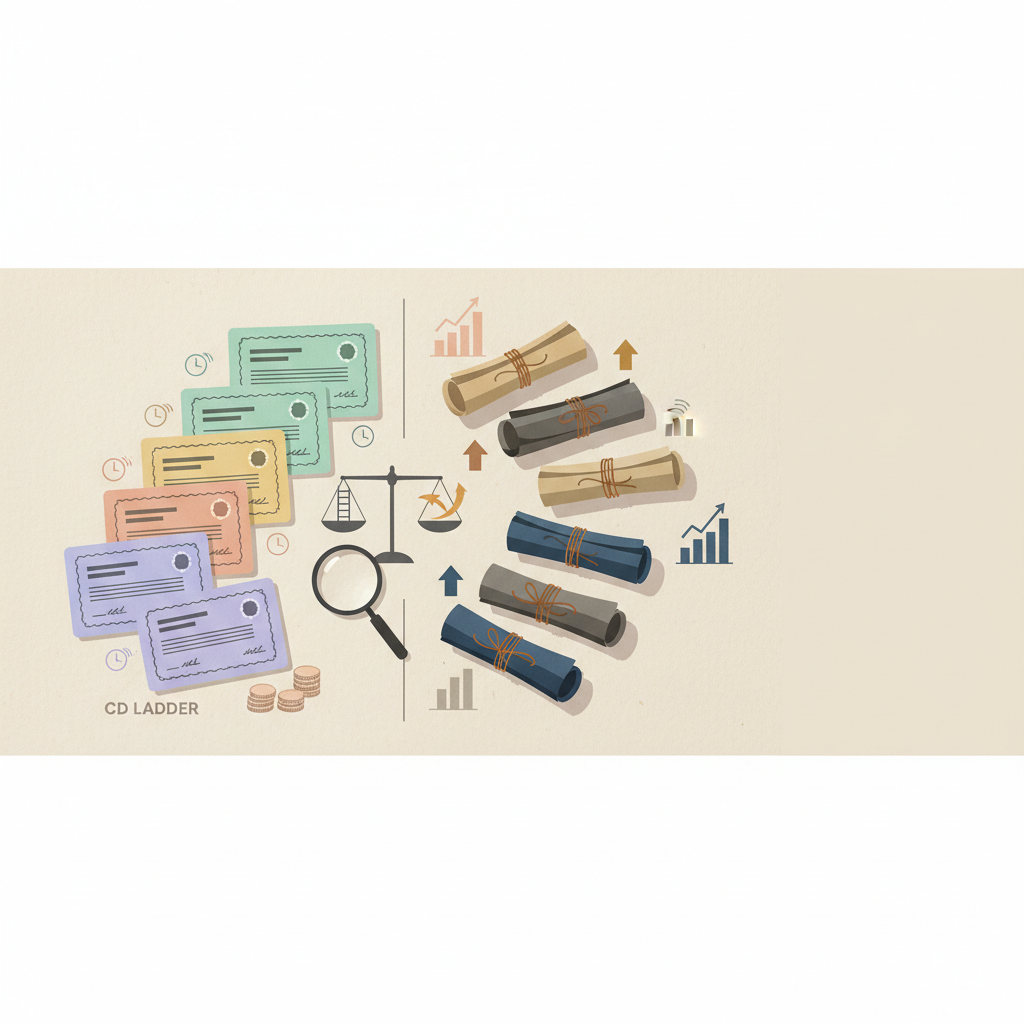
CD Ladder vs Bond Ladder: Which Is Better for Your Income in 2026?
Wondering about a cd ladder vs bond ladder which is better for your savings? Compare rates, risks, and liquidity in our comprehensive guide for 2026 investors.
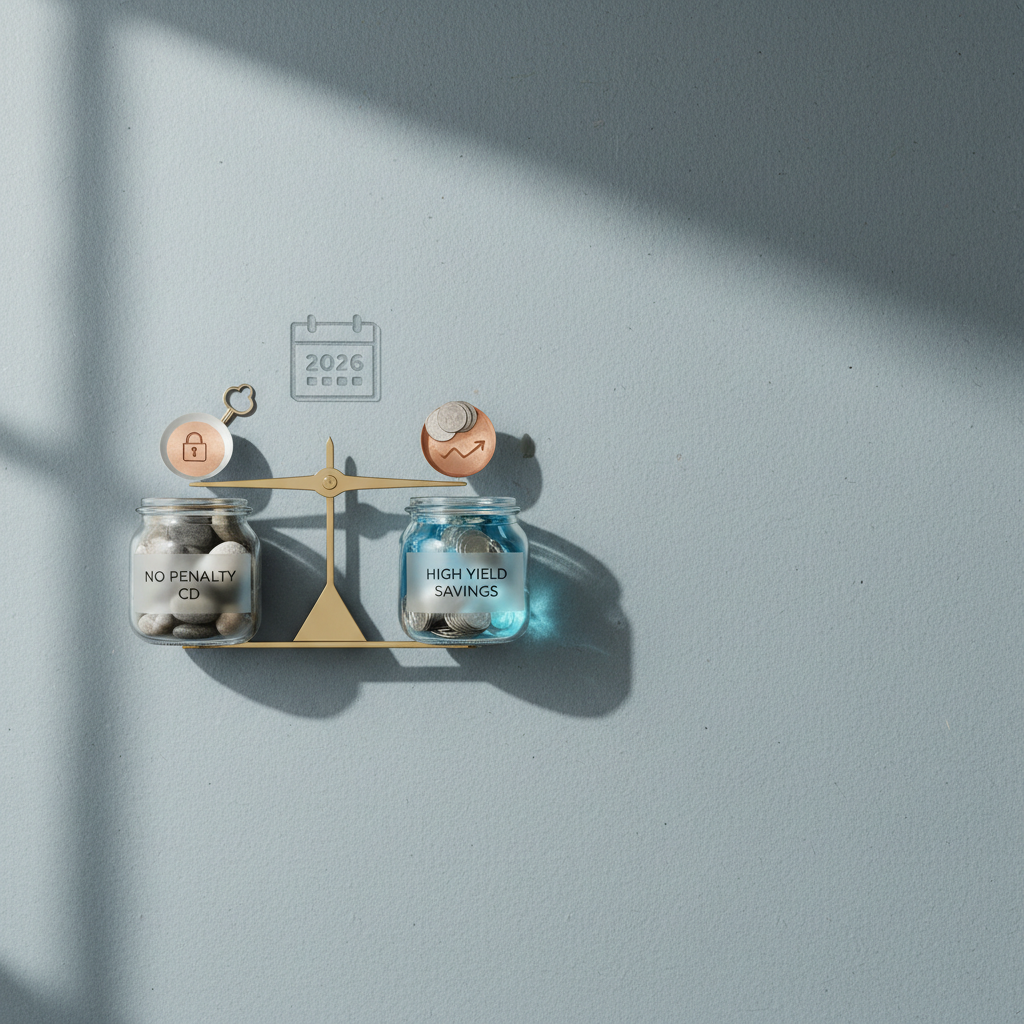
No Penalty CD vs High Yield Savings: Which 2026 Choice Is Best?
Deciding between a no penalty CD vs high yield savings account in 2026? Learn how to lock in rates while maintaining liquidity in today's changing rate environment.