Best Checking Accounts That Pay Interest in 2026: Compare High Yields
Looking for checking accounts that pay interest in 2026? We analyze top yields, fees, and requirements to help you earn more on your everyday balance.
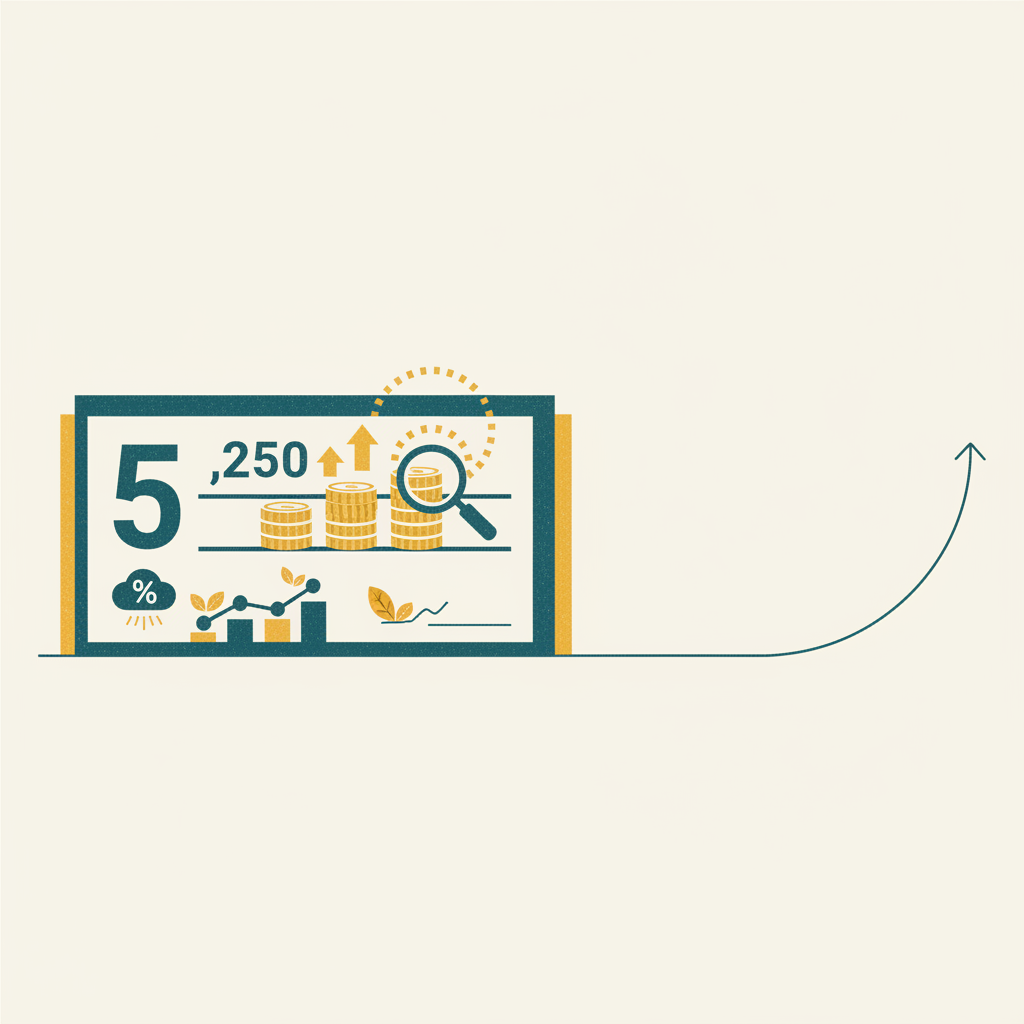
According to current FDIC National Rates and Rate Caps, the national average for a standard interest-bearing checking account sits at a meager 0.08% APY. For a consumer holding a $5,000 average monthly balance, that translates to just $4.00 in interest per year. However, savvy depositors are increasingly moving toward checking accounts that pay interest at rates exceeding 3.00% or even 4.00% APY. In 2026, the gap between traditional 'Big Bank' checking and high-yield online offerings has widened to nearly 50x, making where you keep your liquid cash one of the most impactful financial decisions you can make this month.
Finding checking accounts that pay interest is no longer a niche pursuit for the wealthy. Digital-first banks and credit unions have optimized their overhead to offer rewards-based checking that mimics the performance of high-end savings vehicles. These accounts serve as the primary hub for your financial life—accepting direct deposits, facilitating bill pay, and providing ATM access—all while accruing interest daily. But as yields fluctuate following the Federal Reserve's recent policy shifts, understanding the math behind these accounts is essential to avoid the 'yield inertia' that consumes potential earnings.
High-Yield Checking Comparison: 2026 Data
To understand the current landscape, we must look at how different institution types structure their yields. While a high-yield checking account offers the convenience of liquidity, it often comes with 'hoops'—specific requirements like a minimum number of debit card transactions or a set amount of monthly direct deposits.
| Institution Type | Typical APY | Required Monthly Transactions | Monthly Maintenance Fee |
|---|---|---|---|
| Top-Tier Online Bank | 3.50% - 4.60% | 10+ Debit Swipes | $0 |
| National 'Big Four' Bank | 0.01% - 0.05% | None | $12 (Waivable) |
| Digital Credit Union | 4.00% - 5.00% | 12+ Swipes & Direct Deposit | $0 |
| Community Bank (Rewards) | 2.50% - 4.00% | 10+ Swipes | $0 - $5 |
As the data illustrates, the discrepancy is massive. If you are still utilizing a legacy account with a 0.01% return, you are essentially paying a hidden tax on your liquidity. To combat this, consumers are looking for best online checking accounts 2026 that prioritize both high yields and low barrier-to-entry fee structures.
What the Numbers Actually Say About Yield vs. Requirements
When evaluating checking accounts that pay interest, the Annual Percentage Yield (APY) is only half the story. The 'Effective Yield' is what truly matters. Many institutions lure customers with a headline rate of 5.00% APY but cap that rate at a $10,000 or $15,000 balance. Anything above that 'tier' may earn a significantly lower rate, such as 0.25%.
For example, if you hold $50,000 in a checking account that pays 5% on the first $10,000 and 0.25% on the remainder, your blended APY is roughly 1.20%. In this scenario, you might be better off with a high-yield savings account that offers a flat 4.25% on the entire balance. However, for most Americans who keep between $3,000 and $12,000 in their primary spending account, these tiered rewards checking accounts are mathematical goldmines.
The Cost of Apathy 2026
The Mechanics of Interest-Bearing Checking
How do these accounts work? Unlike a standard savings account, which is governed by different liquidity expectations, an interest-bearing checking account is designed for high-velocity movement. Most top-tier providers in 2026 utilize a 'Rewards Checking' model. To earn the advertised high rate, you typically need to satisfy three conditions each 'qualification cycle': 1. Receive at least one direct deposit (often $500+). 2. Execute 10 to 15 debit card transactions (non-ATM). 3. Opt-in for electronic statements.
Successfully meeting these criteria allows the bank to earn interchange fees from your debit card use, which they then use to subsidize your high APY. If you fail to meet the requirements in a given month, you don't lose your money, but your APY usually drops to a 'base rate'—often the same 0.05% you'd find at a traditional bank. This makes the best free checking accounts no minimum 2026 an attractive alternative for those who don't want to track their debit card swipes closely.
Analyzing the 'Hidden Tax' on Liquidity
There is a psychological comfort in having all your money in one place. However, the 'Inertia Trap' prevents many from realizing that their everyday checking balance is actively losing purchasing power. When inflation is factored in, a 0.05% checking account provides a negative real return.
Research from the Consumer Financial Protection Bureau (CFPB) often highlights how overdraft fees and maintenance charges can further erode the value of a low-interest account. By switching to a checking account that pays interest and has no monthly fees, you create a dual benefit: you eliminate the cost of holding the account while simultaneously generating passive income.
Identifying the Best Checking Accounts That Pay Interest
To find a winner in 2026, you must look beyond the marketing. Here are the analytical steps to vetting a high-yield checking provider:
1. The Rate Cap Analysis Always check the fine print for the 'balance cap.' A bank might offer 6.00% APY, but if it only applies to the first $1,000, it’s a marketing gimmick rather than a wealth-building tool. Look for accounts that offer high rates on at least $10,000 to $25,000 to cover your typical emergency fund plus monthly expenses.
2. Transaction Friction If an account requires 20 debit transactions a month, ask yourself if that matches your lifestyle. If you primarily use a credit card for points and only use your debit card at the ATM, you will likely fail the requirements and earn the base rate. For those users, a money market account hybrid strategy might be more effective, as it offers competitive rates with fewer transaction requirements.
3. Fee Structure and Atms A checking account is useless if you can't access your cash. In 2026, the best checking accounts that pay interest also provide ATM fee reimbursements. Because many high-yield accounts are offered by online-only banks or smaller credit unions without massive branch networks, they partner with networks like Allpoint or MoneyPass to provide thousands of fee-free machines nationwide.
Risk vs. Reward: Is Your Interest-Bearing Checking Safe?
Safety is paramount when discussing where to house your primary funds. Whether you choose a digital disruptor or a local community institution, ensure the bank is a member of the FDIC or the credit union is insured by the National Credit Union Administration (NCUA).
In 2026, we have seen an influx of 'Neo-banks' and FinTech apps. It is crucial to distinguish between a bank and a financial technology company. A FinTech app is often just a front-end interface that partners with a regular bank to hold your funds. Always verify which bank actually holds the deposit to ensure your $250,000 per-depositor insurance limit is intact. This is particularly important for consumers considering moving large sums of money for yield, as noted in the FinTech Divorce: De-Risking Your Online Banking Portfolio guide.
What the Macroeconomic Data Tells Us
The Federal Reserve's 'dot plot' and H.15 Selected Interest Rates reports suggest that while the era of zero-interest rates is behind us, the 'peak' may have passed. This means checking yields may begin to compress in late 2026.
Unlike Certificates of Deposit (CDs), which allow you to maximize short-term gains by locking in a rate, checking accounts are variable. Your 4.00% today could be 3.50% next month. This 'Yield Inertia' is why depositors must remain mobile. If your current bank drops its interest-bearing checking rate significantly below the market leaders, it’s time to move. Loyalty in banking is often a recipe for lost earnings.
Optimization: Checking vs. Savings vs. Money Market
Where does an interest-bearing checking account fit in a diversified cash strategy?
- Checking: Best for money you plan to spend within 30 days. It should earn interest, but its primary job is utility.
- High-Yield Savings: Best for your emergency fund (3-6 months of expenses). These usually offer slightly higher rates than checking but limit transaction frequency.
- Money Market Accounts (MMAs): These act as a middle ground, often coming with a debit card or check-writing abilities and competitive yields.
In 2026, the 'Tiered Liquidity Blueprint' is the most effective way to manage cash. You keep your 'operating capital' in a high-yield checking account to maximize every dollar, your 'reserve capital' in a savings account, and your 'surplus capital' in fixed-rate vehicles like CDs.
Conclusion: Making the Switch
Transitioning to one of the many checking accounts that pay interest is a low-effort, high-reward move. The process usually takes less than 15 minutes to open an account online. The heavy lifting comes from switching your direct deposits and automatic bill payments. However, the data represents a clear mandate: the spread between 0.01% and 4.00% is too wide to ignore. By aligning your liquid cash with a high-performing account, you turn a dormant asset into an active contributor to your financial health.
Frequently asked questions
- Yes, especially if you maintain a balance over $1,000. It allows your 'active' money to work for you. However, ensure the requirements (like debit card swipes) aren't so burdensome that they lead to unnecessary spending.
Related articles
See all →
Best Free Checking Accounts No Minimum 2026: Myths vs. Realities
Discover the best free checking accounts no minimum 2026 residents can use to skip monthly fees. Our guide debunks banking myths with current data and account comparisons.

The Hidden Tax on Liquidity: Analyzing High-Yield Checking Data
Discover how the mathematics of high-yield checking accounts often hides a net loss through restrictive spend requirements and sub-inflation yields.

Best Online Checking Accounts 2026: Top Picks for Low Fees and Yield
Looking for the best online checking accounts 2026? Discover top-rated banks offering zero fees, high interest rates, and seamless mobile apps to optimize your cash flow.
Maximize Short-Term Gains: Finding Best 6 Month CD Rates 2026
Looking for the best 6 month CD rates 2026 has to offer? Compare top annual percentage yields and learn how to secure high short-term returns on your savings.