
What You Must Know About Checking Account Interest Taxes in 2026
Wondering how checking account interest taxes impact your bottom line? Learn how the IRS treats your earnings and how to report high-yield checking interest this year.

While nearly 35% of American households now utilize high-yield digital banking products, a surprising number of savers are caught off guard when tax season arrives. If you have successfully hunted for the best yields this year, your checking account interest taxes may be higher than you expect. Many consumers assume that only specialized investment vehicles like CDs or brokerage accounts trigger a bill from the IRS, but checking account interest is fully taxable as ordinary income in the year it is credited to your balance.
Understanding the nuances of checking account interest taxes is essential for any modern depositor, especially as tiered-rate accounts and rewards checking options have surged in popularity in 2026. Whether you are earning a modest 0.10% at a local branch or a market-leading 5.00% APY at an online fintech, the government views those pennies—and dollars—as earned income. This guide breaks down exactly how the reporting process works, why you might not receive a form for small amounts, and how to stay compliant with Federal tax laws while maximizing your liquid cash.
By the Numbers
Data-Driven Analysis of Modern Yields and Tax Liability
In the current 2026 interest rate environment, the spread between traditional banking and high-yield digital platforms has remained significant. While the FDIC's National Rates and Rate Caps indicate that average savings and checking rates often hover below 1%, premium checking accounts have changed the math for heavy savers. If you maintain a high balance in an interest-bearing transaction account, your tax liability is no longer a rounding error.
| Average Account Balance | Annual APY | Total Interest Earned | Estimated Tax (22% Bracket) |
|---|---|---|---|
| $5,000 | 0.05% | $2.50 | $0.55 |
| $10,000 | 1.00% | $100.00 | $22.00 |
| $25,000 | 4.25% | $1,062.50 | $233.75 |
| $50,000 | 5.00% | $2,500.00 | $550.00 |
As the table illustrates, a customer utilizing a high-yield checking account with a substantial balance could easily owe hundreds of dollars in taxes. This is a stark departure from a decade ago when checking accounts were purely transactional and rarely offered meaningful returns. Today, savvy consumers are increasingly looking for ways to consolidate their finances, but that consolidation means your monthly statement is now a tax document.
What the Numbers Actually Say About Taxable Interest
The IRS is very clear: nearly all interest income is taxable. According to the IRS Topic No. 403, interest is considered taxable in the year it is made available to you. For a checking account, this occurs every single month when your statement cycles and the bank deposits those earnings into your account. Even if you do not withdraw the money, it is considered "constructively received."
One common point of confusion is whether banking rewards and bonuses count toward checking account interest taxes. Generally, if a bank gives you cash for opening a new account (a sign-up bonus), the IRS treats this as interest income rather than a discount or rebate. For example, if you are looking to maximize your returns: best brokerage account bonuses 2026 offers, you must account for the fact that a $500 bonus will likely result in a 1099-INT.
Conversely, credit card rewards or cash back on debit card spending are typically classified as rebates on purchases and are not taxable. If your checking account offers 1% cash back on spending, that is generally tax-free. However, if that same account offers a 4% APY on your daily balance, that 4% is taxable. This distinction is critical for your 2026 tax planning.
Navigating Form 1099-INT for Checking Accounts
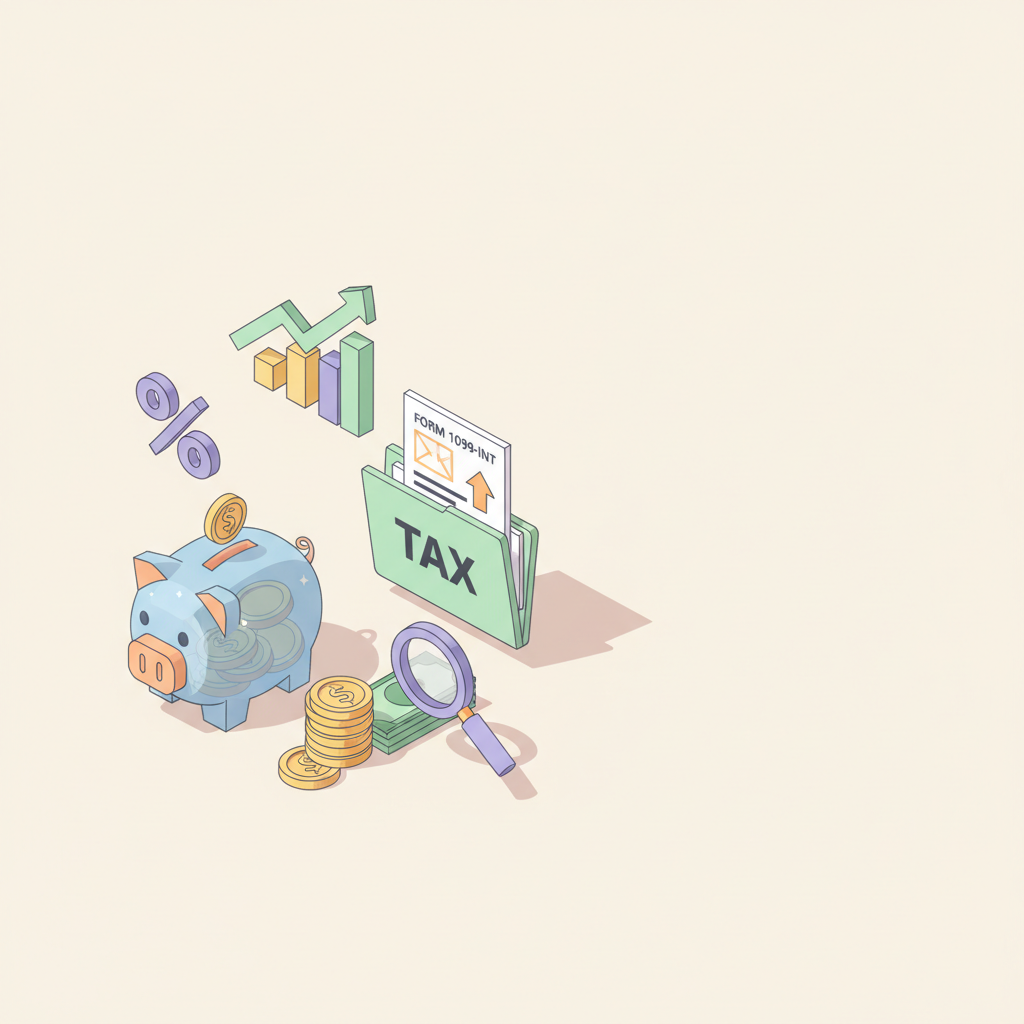
By January 31, 2026, your financial institution is required to provide you with Form 1099-INT if you earned at least $10 in interest during the 2025 calendar year. This form will list your total interest in Box 1. For most taxpayers, this amount is transferred directly to Schedule B of Form 1040.
Many digital banks no longer mail paper forms. To ensure you are prepared for the 2026 filing season, you should log into your online banking portal and check the "Tax Documents" section. If you have been mastering checking account direct deposit requirements in 2026 to qualify for a higher interest rate, your earnings may have crossed that $10 threshold without you realizing it.
If you find that you have earned interest across multiple platforms—perhaps because you use a local bank for cash and an online bank for yield—you must aggregate all of these amounts. The IRS receives a copy of every 1099-INT issued in your name, and their automated systems are highly efficient at flagging discrepancies between what the bank reported and what you declared on your return.
How State Taxes Impact Your Checking Returns
While federal taxes are the primary concern, do not forget about state income taxes. Most states treat checking account interest as regular taxable income. If you reside in a high-tax state like California or New York, your effective tax rate on those earnings could exceed 40% when combined with federal rates.
For residents in major hubs, choosing the right institution can mitigate some frustration. If you are comparing the best local banks in Los Angeles, CA versus an online-only option, check if the interest earned is high enough to justify the additional tax paperwork in your specific state. Some specialized municipal bonds offer tax-exempt interest, but checking accounts almost never fall into this category.
Strategic Comparisons: Checking vs. Other Taxable Assets
When deciding where to park your cash in 2026, it is helpful to compare checking account interest taxes with the tax treatment of other vehicles. For instance, if you are debating HYSA vs Treasury Bills: where should you park your cash in 2026?, remember that Treasury interest is exempt from state and local taxes, whereas checking account interest is not. This can make Treasuries more attractive for those in high-tax jurisdictions despite similar headline APYs.
Furthermore, if you are looking at long-term wealth building, you might compare these yields to equities. In a dividend stocks vs high yield savings: which wins in 2026? analysis, you would find that "qualified" dividends are often taxed at a lower capital gains rate (0%, 15%, or 20%), whereas checking interest is always taxed at your higher ordinary income rate. This makes high-yield checking better for liquidity, but potentially less efficient for tax-sensitive growth.
Tax-Advantaged Alternatives: The HSA Strategy
If the tax bite on your checking interest is frustrating, consider whether some of that cash could be redirected into a tax-advantaged account. For example, understanding HSA as a retirement account explained: the triple tax advantage can be a game-changer. An Health Savings Account allows you to earn interest or investment gains entirely tax-free, provided the funds are used for qualified medical expenses. While an HSA is not a replacement for a transaction checking account, it is a superior place to store an emergency fund that would otherwise be generating taxable interest in a standard account.
Reporting Interest for Non-Traditional Accounts
In 2026, the line between "bank" and "fintech" continues to blur. If you use a neo-bank or a money management app, the interest you earn is still subject to checking account interest taxes. These platforms usually partner with a traditional bank to provide FDIC insurance; it is that partner bank that will typically issue your 1099-INT. Some consumers accidentally omit this income because the name on the tax form (e.g., "Coastal Community Bank") doesn't match the flashy app name they use every day (e.g., "SpendWise Fintech").
Always verify the "Bank of Record" in your account's Terms of Service. This ensures you aren't searching for a tax form that lists a name you don't recognize. Failure to report this income can lead to underpayment penalties and interest charges from the IRS, according to Federal Reserve guidance on consumer financial protection and disclosure.
Does the Type of Checking Account Matter?
Not all checking accounts are created equal when it comes to reporting.
- Standard Interest Checking: These pay a flat rate on all balances. Simple and straightforward 1099-INT reporting.
- Tiered-Rate Checking: These pay higher rates on balances up to a certain limit (e.g., 5% on the first $10,000 and 0.50% thereafter). You report the total aggregate interest earned across all tiers.
- Rewards/Kasasa Checking: These require certain actions (like 12 debit swipes) to earn a high rate. The "reward" is still classified as interest by the IRS.
- Business Checking: If your business is an LLC or S-Corp, the interest is reported on your business tax return, though the principles of checking account interest taxes remain the same.
If you find yourself frequently switching to chase higher rates, ensure you keep a log of every account opened during the year. Using a complete how to switch banks checklist for 2026 can help you keep track of which institutions will be sending you tax forms in January.
What if You Don't Receive a 1099-INT?
A frequent misconception is that "no form means no tax." If you earned $7.50 in interest, the bank is not required by law to send you a 1099-INT, and they generally won't, as it costs them money to produce and mail. However, the IRS still expects you to include that $7.50 in your total interest income. For some, this might seem like overkill, but in the era of digital footprints and increasing IRS enforcement budgets, accuracy is your best defense against an audit.
Review your December 31, 2025, bank statement. It will typically show a "Year-to-Date Interest Paid" figure. This is the number you should use for your filing if no official form is generated.
Final Thoughts: Balancing Yield with Tax Reality
Optimizing your cash management isn't just about finding the highest APY; it's about understanding the net return after checking account interest taxes are paid. If you are in a high tax bracket, a 5% checking account might only net you 3.1% after Uncle Sam takes his cut. By staying organized, checking your online portals for 1099-INTs early, and perhaps diversifying into tax-exempt vehicles for excess cash, you can ensure that your 2026 financial plan remains robust and compliant.
Frequently asked questions
- Yes, checking account interest is considered ordinary income by the IRS and must be reported on your federal and state tax returns in the year it is earned.
Related articles
See all →
Saving vs. Investing in 2026: Financial Blueprint and Allocation Guide
Wondering how much should i invest vs save in 2026? This data-driven guide analyzes liquidity needs, market returns, and the best accounts for your surplus cash.

Emergency Fund Where to Keep It 2026: The Ultimate Cash Guide
Discover the best vehicles for your rainy-day cash with our guide on emergency fund where to keep it 2026, comparing yields, liquidity, and security for your savings.

How Much Money Should I Keep in Savings? The 2026 Cash Playbook
Discover precisely how much money should i keep in savings for 2026 based on your unique risk profile, emergency needs, and the latest federal interest rate conditions.
High Yield Savings Account Taxes 2026: The Complete Tax Guide
Learn how high yield savings account taxes work in 2026, including 1099-INT requirements, federal tax rates on interest, and strategies to maximize your after-tax yield.