Are High Yield Savings Accounts Safe? 2026 Security and Risk Guide
Discover the truth behind the question: are high yield savings accounts safe? Learn how FDIC insurance, digital security, and 2026 banking regulations protect your money today.
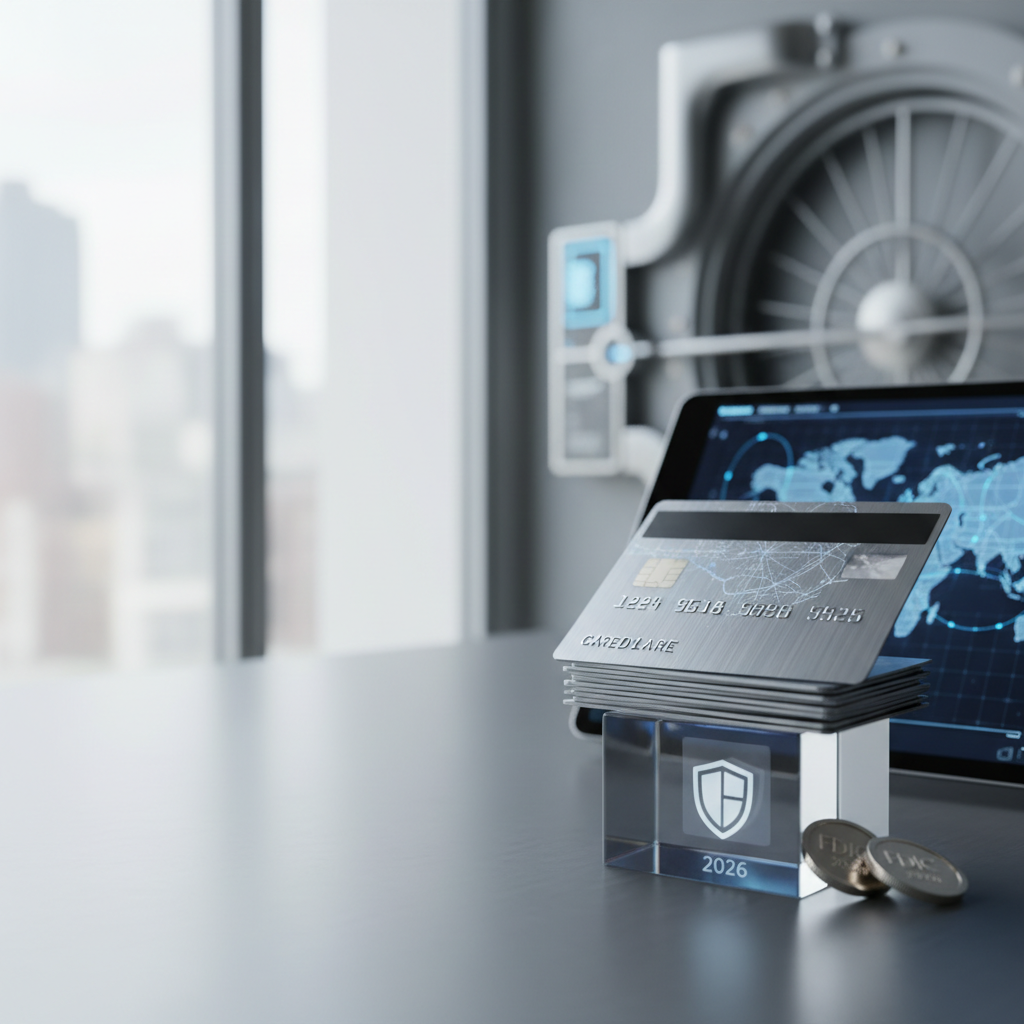
Navigating the financial world often leads to one critical question for conservative savers: are high yield savings accounts safe? As we move through 2026, the allure of earning competitive yields—far exceeding the national average—has drawn millions of Americans away from traditional brick-and-mortar institutions toward digital-first platforms. While the interest rates are attractive, it is only natural to wonder if these higher returns come at the cost of your principal's security. Fortunately, for the vast majority of consumers, high-yield savings accounts (HYSAs) are incredibly safe, provided you understand the regulatory frameworks and digital safeguards that underpin them.
In the current economic climate of 2026, where the Federal Reserve has maintained a watchful eye on inflation and market liquidity, the safety of your cash deposits remains a top priority. When you ask, "are high yield savings accounts safe?" the answer largely depends on whether the institution is backed by the federal government. Most reputable online banks offering these accounts are members of the Federal Deposit Insurance Corporation (FDIC) or, in the case of credit unions, the National Credit Union Administration (NCUA). This means that even in the unlikely event of a bank failure, your funds are protected up to statutory limits.
| Account Category | Typical 2026 APY | Primary Safety Mechanism | Liquidity Level |
|---|---|---|---|
| Online High-Yield Savings | 4.40% - 5.10% | FDIC/NCUA Insured | High (Daily Access) |
| Traditional Big-Bank Savings | 0.01% - 0.45% | FDIC Insured | High (In-Branch/ATMs) |
| Treasury Bills (Short-Term) | 4.25% - 4.75% | Full Faith & Credit of U.S. | Moderate (T+1 Settlement) |
| Money Market Funds | 4.80% - 5.25% | SIPC Protection (Limited) | High (Varies by Broker) |
The Core Safety Net: FDIC and NCUA Insurance in 2026
When evaluating if high-yield savings accounts are safe, the first thing to check is the insurance status. This is the bedrock of American consumer banking. According to the FDIC's National Rates and Rate Caps, even as interest rates fluctuate, the fundamental protection of $250,000 per depositor, per insured bank, for each account ownership category remains the gold standard.
In 2026, this protection is more robust than ever. If you have a joint account with a spouse, your total coverage for that specific account is effectively $500,000. For individuals building substantial wealth, diversifying across different institutions ensures that every dollar remains under the umbrella of federal protection. This is a critical component for those deciding how much should i keep in savings? a 2026 strategy guide while staying beneath insurance thresholds.
It is important to distinguish between a bank and a fintech "neobank." Some fintech companies are not banks themselves but partner with FDIC-insured institutions to hold your deposits. In these cases, your money is still safe, but you must verify that the partner bank is clearly disclosed. Always look for the "Member FDIC" logo on the website or mobile app. Without this, the answer to "are high yield savings accounts safe" becomes a definitive no.
Online High-Yield Savings Accounts: Digital Security and Accessibility
Online-only banks are the primary providers of high-yield savings products. Because they don't have the overhead costs of physical branches—rents, utilities, and large on-site staff—they can pass those savings back to you in the form of higher APYs. However, the lack of a physical building often triggers anxiety about security.
In 2026, digital security has reached a sophisticated peak. Most top-tier online banks utilize multi-factor authentication (MFA), biometric logins, and advanced encryption that rivals the systems used by the Department of Defense. Furthermore, many online banks offer more nimble customer service and fraud detection alerts than their legacy counterparts. If you are looking for the best savings accounts for emergency fund: 2026 selection guide, you will find that online HYSAs are usually at the top of the list for both safety and performance.
Online High-Yield Savings Accounts — Security & Utility
- FDIC/NCUA backing ensures principal protection up to $250k
- Higher APYs help combat the eroding effects of inflation
- Advanced 2026 encryption and MFA protocols prevent unauthorized access
- Lack of physical branches may bother those who prefer face-to-face service
- Transfers to external checking accounts can take 1-3 business days
- Potential for "rate chasing" as online yields change frequently
Traditional Big-Bank Savings: The Safety of the Familiar
Traditional institutions, like the major national banks with branches on every corner, offer a different kind of safety: the safety of the familiar. These banks are often categorized as "Too Big to Fail" by regulators, meaning the federal government provides an extra layer of oversight because their stability is integral to the entire global economy.
While the APYs at these institutions are notoriously low—often as low as 0.01% in mid-2026—some savers find the ability to walk into a building and speak to a person worth the loss in potential earnings. However, from a purely "risk of loss" perspective, a $10,000 deposit in a big bank is no safer than $10,000 in a reputable best online savings accounts 2026: compare top high-yield picks provider. Both carry the same FDIC guarantee. The trade-off here isn't safety; it's the cost of convenience.
Traditional Big-Bank Savings — Pros & Cons
- Physical locations for cash deposits and notary services
- Established reputations spanning decades
- Immediate access to funds via branch withdrawals
- APYs are significantly lower than online high-yield options
- Monthly maintenance fees are common unless high balances are kept
- Slower to adopt the latest digital security features compared to fintechs
Are There Risks? Understanding Market and Inflation Risks
When people ask, "are high yield savings accounts safe?" they are usually asking about the safety of their principal. However, there are other types of risk to consider in 2026.
- Variable Interest Rate Risk: Unlike a Certificate of Deposit (CD), the interest rate on a high-yield savings account is not locked. The bank can change it at any time. While your principal is safe, your future earnings are not guaranteed. If the Federal Reserve began a series of rate cuts, your 5.00% APY could drop to 3.50% in a matter of months. For those seeking fixed returns, you might consider how a jumbo cd rates 2026: compare top yields for large deposits strategy might offer more stability.
- Inflation Risk: Even a high-yield account might not keep pace with inflation. If your account pays 4.5% but the Consumer Price Index (CPI) increases by 5%, your "real" purchasing power is actually shrinking. According to the Bureau of Labor Statistics, monitoring the gap between your APY and inflation is essential for long-term wealth preservation.
- Liquidity Lag: While HYSAs are generally liquid, they are not as fast as a checking account. Most HYSAs limit you to six outgoing transfers per month (though many banks have relaxed this since the Fed's Regulation D changes). Furthermore, transferring money to an external bank can take time, which might be a concern during a personal financial emergency.
Comparing HYSAs to Other "Safe" Havens
To truly answer if high yield savings accounts are safe, we must look at how they stack up against other low-risk vehicles. In 2026, many investors are torn between high-yield savings and Money Market Accounts (MMAs). MMAs are very similar to savings accounts but often come with check-writing privileges or a debit card, making them slightly more liquid. You can explore the nuances in our high yield savings vs money market: 2026 cash management guide.
Another comparison involves Treasury Bills. T-Bills are backed by the full faith and credit of the U.S. government, which many consider even safer than the FDIC. However, they are less liquid than a savings account. For a detailed breakdown of these two defensive strategies, see our guide on cd vs treasury bills: 2026 comparison guide.
Practical Steps to Verify Account Safety
If you are ready to open a new account but are still feeling hesitant, follow this checklist to ensure you are choosing a secure institution:
- Verify the FDIC/NCUA Status: Use the FDIC BankFind tool to search for the bank by name. If you are using a fintech app, look at the fine print at the bottom of the homepage to see which bank holds the deposits.
- Check the URL: Ensure the website starts with "https://" and has a padlock icon. Cyber-security in 2026 often involves "spoofed" websites that look like real banks but are designed to steal credentials.
- Audit Your Own Security: Use a unique, complex password for your banking. Enable app-based 2/FA instead of SMS-based 2/FA, as the former is more resistant to "SIM-swapping" attacks.
- Read Recent Reviews: Look for reviews from the first half of 2026. If a bank has recently had technical glitches or customer service meltdowns, it might be safer to look elsewhere.
Why HYSAs Remain the Gold Standard for Cash in 2026
Despite the rise of decentralized finance and alternative assets, the high-yield savings account remains the premier place for an emergency fund. As noted by the Consumer Financial Protection Bureau (CFPB), having a liquid, insured cash cushion is the single most effective way to prevent financial ruin during a job loss or medical emergency.
In 2026, the question is no longer just about safety—it's about optimization. Because high-yield savings accounts offer a combination of federal insurance, high digital security, and yields that keep you competitive with the market, they are arguably the safest "productive" place for your cash.
Whether you are saving for a down payment or just parking your "sleep-better-at-night" fund, the safety protocols in place today are designed specifically to protect you from both institutional failure and digital theft. By sticking to FDIC-insured institutions and practicing good digital hygiene, you can rest assured that your money is not just working hard, but is also secure.
Frequently asked questions
- Yes, online-only banks are just as safe as traditional banks as long as they are FDIC insured. The FDIC protects deposits regardless of whether the bank has physical branches.
Related articles
See all →