Are High Yield Savings Accounts FDIC Insured? 2026 Safety Guide
Wondering are high yield savings accounts fdic insured? Get the facts on bank safety, coverage limits, and how to verify your savings are protected in 2026.
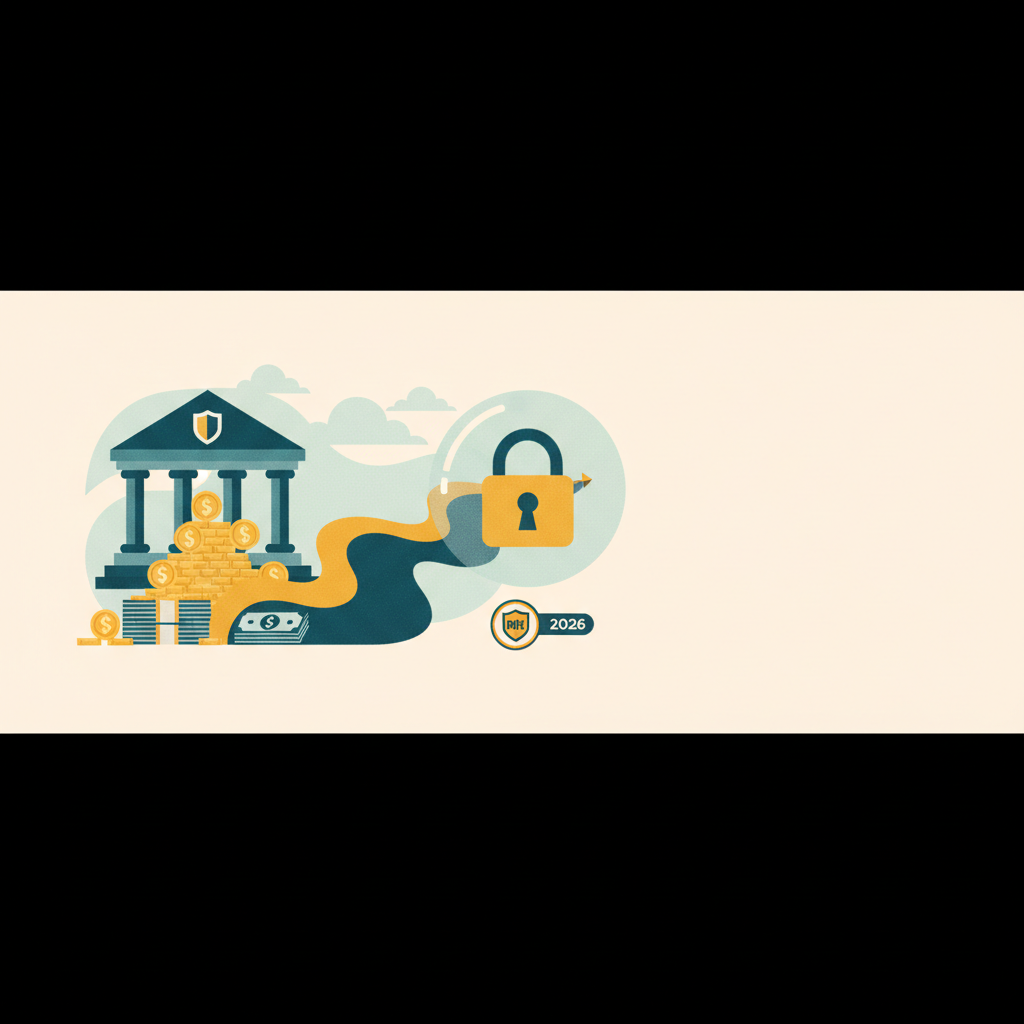
When you are looking to maximize your interest earnings in mid-2026, safety remains the paramount concern for most American savers. With online banks offering rates that significantly outperform traditional brick-and-mortar institutions, the question inevitably arises: are high yield savings accounts fdic insured? The short answer is yes, provided the institution is a member of the Federal Deposit Insurance Corporation. However, the nuances of how that insurance is applied—and how it differs across various financial products—can impact whether your entire balance is truly protected.
In this 2026 guide, we explore the safety layers of high-yield savings accounts and how they compare to other popular cash management tools. Protecting your principal is just as important as the yield it generates. Whether you are building an emergency fund or parking cash for a short-term goal, understanding the regulatory backstops that govern your money is essential for peace of mind.
Side-by-Side: Cash Safety Comparison 2026
While high-yield savings accounts (HYSAs) are the most popular choice for liquid cash, they are not the only option. Money market accounts, credit union share accounts, and brokerage cash sweeps all provide different levels of security and yield.
| Account Type | Primary Insurer | Std. Coverage Limit | Typical 2026 APY | Liquidity |
|---|---|---|---|---|
| Online HYSA | FDIC | $250,000 | 4.35% - 5.10% | High |
| Credit Union HYSA | NCUA | $250,000 | 4.25% - 4.95% | High |
| Money Market Account | FDIC/NCUA | $250,000 | 4.15% - 4.85% | High (v. limited checks) |
| Brokerage Cash Sweep | SIPC/FDIC | $500k (SIPC) / Multi-Bank | 4.00% - 4.75% | High |
High-Yield Savings Accounts (HYSAs)
The high-yield savings account is the gold standard for consumers who want to grow their money without taking market risk. When people ask, "are high yield savings accounts fdic insured," they are usually referring to the digital-first banks that rose to prominence over the last decade. These institutions are real banks, not just tech platforms. They maintain FDIC membership just like the largest national players, meaning your deposits are backed by the full faith and credit of the United States government.
According to the FDIC's National Rates and Rate Caps, the average savings rate remains significantly lower than what top-tier online banks offer. This yield gap often makes consumers skeptical of the security, but the insurance mechanism is identical regardless of the interest rate. If you are comparing these to more restrictive options, you might also want to learn what is a CD ladder and how does it work? to see if locking in rates is a better move for your specific timeline.
[[PROSCONS title="High-Yield Savings Accounts — Pros & Cons 2026"] + Direct FDIC insurance coverage up to $250,000 per depositor. + High liquidity with usually up to 6 withdrawals per cycle (or unlimited). - Variable rates that can fluctuate based on Federal Reserve policy. - No physical branches for most high-yield online institutions. [[/PROSCONS]]
Credit Union High-Yield Accounts
Credit unions are an often-overlooked alternative to banks. They offer "share accounts" that function very similarly to high-yield savings accounts. Instead of being insured by the FDIC, they are covered by the National Credit Union Administration (NCUA). The NCUA's Share Insurance Fund provides the same $250,000 limit per depositor, per institution, for each ownership category.
In 2026, many credit unions are highly competitive with online banks, especially for members who prefer a cooperative model. If you are debating between these two, you may find that high yield savings vs money market account comparisons often point to credit unions as having some of the best blended rates for local members.
[[PROSCONS title="Credit Union High-Yield Accounts — Pros & Cons 2026"] + NCUA insurance provides the same level of federal protection as the FDIC. + Often lower fees and better customer service than large national banks. - Many require a specific membership association or geographical location. - Digital mobile apps may not be as feature-rich as top-tier online banks. [[/PROSCONS]]
Money Market Accounts (MMAs)
A Money Market Account combines features of both savings and checking accounts. Like HYSAs, these accounts are generally FDIC-insured when opened at a participating bank. In 2026, they are particularly popular for those who want a high yield but also need the ability to write an occasional check or use a debit card directly from their savings.
Understanding the safety of these accounts is crucial, especially when compared to "Money Market Funds" (mutual funds) which are NOT FDIC-insured. If safety is your primary driver, always confirm you are opening an "Account" at a bank, not a "Fund" at a brokerage. For those looking at these for 2026, is a high yield savings account safe? offers a deeper dive into these specific distinctions.
[[PROSCONS title="Money Market Accounts — Pros & Cons 2026"] + Full FDIC/NCUA insurance coverage applies. + Added convenience of check-writing or debit card access. - Often require a higher minimum balance to earn the top APY. - Rates may slightly trail the very best HYSAs due to higher operational costs. [[/PROSCONS]]
Brokerage Cash Sweep Programs
In 2026, many fintech and brokerage platforms offer "Cash Sweep" programs. These are technically not high-yield savings accounts themselves. Instead, the brokerage "sweeps" your uninvested cash into a network of partner banks. This often allows for much higher insurance limits—sometimes up to $2 million or more—because the money is spread across multiple FDIC-insured institutions.
This is a sophisticated way to handle savings for high-net-worth individuals, but you must ensure the underlying banks are indeed FDIC members. While the brokerage carries SIPC insurance, that only protects against the firm's failure, not against the loss of value or bank insolvency. For those diversifying their portfolio, it might be worth checking best online checking accounts 2026 to see how to integrate these sweeps with your daily cash flow.
[[PROSCONS title="Brokerage Cash Sweeps — Pros & Cons 2026"] + Potentially much higher FDIC insurance limits via multi-bank networks. + Keeps cash ready for immediate investment in stocks or ETFs. - The intermediary nature can make fund transfers slightly more complex. - Terms of the sweep can change faster than a traditional bank's policies. [[/PROSCONS]]
Deep Dive: How FDIC Insurance Works in 2026
To truly answer "are high yield savings accounts fdic insured," we have to look at the Federal Deposit Insurance Act's requirements. The $250,000 limit is non-negotiable, but it is applied per depositor, per insured bank, for each account ownership category. This means a married couple could potentially have up to $500,000 insured in a joint account, plus $250,000 each in individual accounts at the same bank, for a total of $1 million in coverage.
Verifying Your Bank's Status
You should never take a bank’s word for it. In 2026, the rise of "neobanks" (which are technology companies, not banks) has added a layer of complexity. These companies partner with chartered banks to hold your funds. To verify coverage, users should use the FDIC BankFind Suite. Search for the name of the institution holding your deposits. If the entity is a neobank, it should clearly state which partner bank holds the funds.
The Importance of Ownership Categories
Many consumers don't realize that insurance limits are segmented. For instance, your personal savings and your IRA at the same bank are considered different categories. According to the Federal Reserve’s Consumer Guide to Bank Services, understanding these categories can help you maximize your protected balance without having to open accounts at ten different institutions.
The Role of Interest Rates in 2026 Safety
As of May 2026, the economic environment has stabilized, but interest rates remain elevated compared to the early 2020s. This has led to a proliferation of high-yield products. Some consumers worry that a high APY implies higher risk. It is important to remember that FDCI insurance does not care about your interest rate. Whether your bank pays 0.01% or 5.15%, the insurance protection is identical.
High-yield online banks can afford to pay more because they don't have the overhead of thousands of physical branches, not because they are skimping on security. They still adhere to the same capital requirements and regulatory oversight as any “Big Four” bank. For those looking for even more stability, checking best 5 year CD rates 2026 might reveal options to lock in these high rates for the long term, though your liquidity is reduced.
Strategies for Large Deposits
If you are lucky enough to have more than $250,000 in liquid cash, you need a strategy to ensure you remain fully insured.
- Joint Accounts: As mentioned, a joint account with a spouse effectively doubles your coverage to $500,000.
- Multi-Bank Strategy: Spread your cash across multiple top-tier online banks. This not only keeps you under the insurance limits but also allows you to take advantage of different rate cycles. Read about how often do high yield savings rates change to effectively time your moves.
- CDARS and ICS Programs: Many banks participate in services that automatically spread larger deposits across multiple institutions while keeping your interface as a single account.
Common Misconceptions About Bank Insurance
One common myth is that FDIC insurance takes years to pay out if a bank fails. Historically, the FDIC has typically made insured funds available within one to two business days of a bank's closure. This liquidity is a primary reason why high-yield savings accounts are considered the safest "parking spot" for an emergency fund. Unlike a brokerage account, which might suffer from market volatility precisely when you need the money, an HYSA provides a steady value regardless of market conditions.
Another misconception involves the type of assets covered. Only deposits are insured. This includes savings accounts, checking accounts, CDs, and money market accounts. Assets like stocks, bonds, mutual funds, and annuities are not covered by the FDIC. If you are exploring other vehicles, make sure you understand the difference; for example, what is an annuity? will show you why those products have entirely different risk profiles than a savings account.
Conclusion: Navigating 2026 With Confidence
Ultimately, the safety of your money depends on your due diligence. High-yield savings accounts are an incredible tool for wealth preservation and growth, and yes, they are FDIC insured when held at member banks. In the current 2026 banking environment, being well-informed about coverage limits and institutional stability is the best way to ensure your financial foundation remains rock-solid while you chase the best possible returns.
Frequently asked questions
- No, only accounts at FDIC-member banks are insured. Some high-yield products are offered by credit unions (covered by the NCUA) or brokerage firms (covered by SIPC/FDIC through partner banks). Always look for the FDIC logo.
Related articles
See all →
How Often Do High Yield Savings Rates Change? 2026 Timing Guide
Wondering how often do high yield savings rates change? Discover the factors that trigger APY shifts, from Fed decisions to market competition, in our latest 2026 guide.

Best High Yield Savings Accounts 2026: Compare Rates and Find Your Fit
Looking for the best high yield savings accounts 2026? Compare top rates, FDIC-insured options, and expert strategies to maximize your cash returns in today's market.

Maximize Your Returns: Best High Yield Savings Accounts 2026
Discover the best high yield savings accounts 2026 to grow your emergency fund. Compare annual percentage yields, fees, and safety with our in-depth strategy guide.

Is a High Yield Savings Account Safe? 2026 Security and Risks Explained
Discover the latest data on depository insurance and digital security to answer the question: is a high yield savings account safe for your cash in 2026?